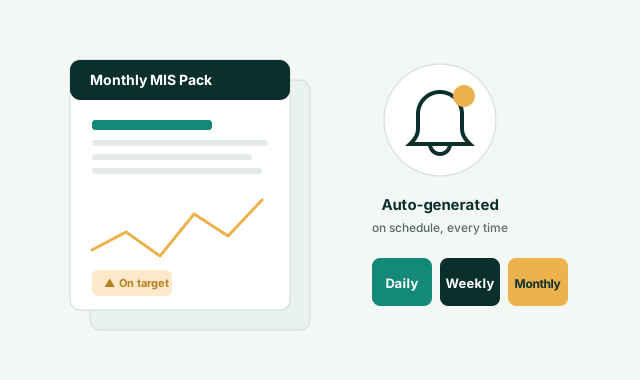
Automated daily, weekly, and monthly MIS reports — accurate, consolidated, and on your desk before you have to ask for them.
In most growing businesses, someone manually compiles numbers from different branches, departments, or software at month-end, formats it, and emails it around. It's slow, inconsistent, and outdated the moment it lands. We rebuild that process so reports generate themselves — accurately, on schedule, every time.
Chasing data from five people, every month-end, by email.
Sales, collections, stock, production, and expense reports that generate automatically from your systems.
One unified report pulling data from multiple branches, warehouses, or units without manual merging.
Reports that show performance against budgets and targets, with automatic variance flagging.
Built around how your management actually wants to read data — not a generic format.
Automated ageing reports, outstanding payment trackers, and collection efficiency summaries.
Reports that highlight only what's unusual — shortages, overruns, missed targets — so nothing is buried.
We map every report created manually, and what's actually used vs. "always been done."
We trace where each number comes from and identify automation points.
We design the layout around what decision-makers need to see first.
We connect the sources and build the generation logic in Excel, Python, or Power BI.
We run the new system alongside the old one briefly, to confirm accuracy.
Your team starts receiving accurate, automated reports — without the scramble.
Let's map your current reporting process and show you exactly where the automation fits.
Schedule a Free MIS Review